
From Ethernet to AI: Earning a Network Engineer’s Trust
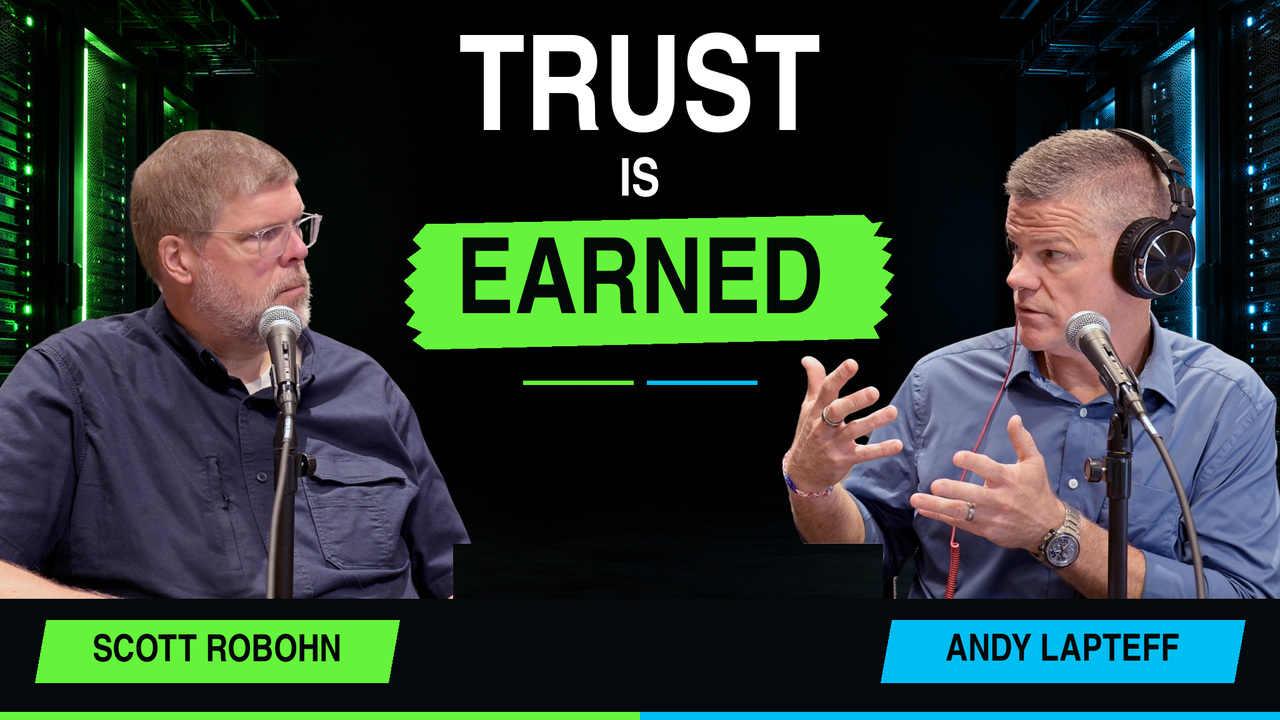
Before Scott Robohn and I started recording at Networking Field Day 41, we were trying to figure out what to talk about. AI was the obvious choice. It’s showing up in the tools we use, changing what we can build, and raising questions about where our jobs are headed. But I wondered what we could add to a conversation everyone in the industry seems to be having. Scott suggested we talk about how we build trust in new systems, something he’s spent much of his career doing. He started with Ethernet.
It’s easy to forget that the technologies we barely think about today once required people to be pretty skeptical. Scott took us back to the 1990s, when you couldn’t assume equipment from different vendors would behave the same way. One vendor’s Ethernet defaults might differ from another’s. Auto-negotiation and duplex settings needed attention. Before relying on a mixed environment, engineers had to understand those behaviors and test the combinations they intended to use.
Confidence came from getting specific. Knowing how vendor A behaved, how vendor B behaved, and what settings allowed them to work together gave an engineer something useful to rely on. Over time, a lot of people did that work. Scott described us as standing on the shoulders of interoperability giants, which is a good way to put it. When Ethernet or OSPF seems routine now, we’re benefiting from years of engineering that made it possible to treat it that way. Scott also knew someone listening would immediately have an interoperability horror story to share. Familiar technology still gives us reasons to pay attention.
His Bell Atlantic story made that process more tangible. The campus network had been running on Wellfleet routers and, as he recalled, Cabletron hubs. His team was evaluating a new architecture with Ethernet connections in the wiring closets and ATM connections into a backbone. ATM was the exciting new technology in this story, which gave both of us a chance to feel old.
They brought loaner equipment from four vendors into the Data Network Control Center in downtown Washington, D.C. They hadn’t already chosen a winner. Each vendor had to go through an explicit test plan based on the architecture and the requirements of the organization. A recognizable name on the equipment wasn’t enough to settle the decision.
I wanted to understand what those tests looked like. Was it enough to see a route and successfully ping something? Scott described going beyond that, using test traffic and taking account of the applications the network needed to support. One example was a training group using X Windows, with servers and clients in different locations. The proposed infrastructure needed to support that environment. Each vendor would face the same minimum requirements before the team considered a limited production trial.
That’s a useful example of how trust develops in infrastructure. The team could examine behavior that mattered to their own users and applications. Passing those tests gave them a basis for taking the next step into a limited trial, where they could learn more. I kept asking how long all of this took. Scott’s recollection was a couple of weeks per vendor. When I added up the calls and the planning, he thought the whole process took less than six months, though he was careful to say his memory was fuzzy. Later in our conversation I called it five. It required time, equipment, and people who knew what they needed to find out.
That pace feels very different from the AI conversation happening around us. We hear that we need to start using these tools everywhere, and the tools themselves keep changing. Scott made the point that many of the voices encouraging rapid adoption don’t carry production responsibility for our networks. He wasn’t dismissing what vendors are doing. They have products to explain, and some of those products can help us. But the engineer who has to answer for an outage still needs to understand what’s being introduced and how it behaves.
We’ve worked through some of this with automation already. Scott reminded me of how excited I was when I got my first Python script to log into a switch. I still have that script. It was a small thing, but watching it connect and do what I expected made the possibilities feel real in a way they hadn’t before. There’s a long way between that first successful connection and running a production environment through automation. Still, having something concrete to examine gave me a place to start learning.
Scott shared a much larger example from a study he did with Lumen. He described a multi-year effort involving more than 1,000 workflows, with the team defining, testing, automating, and orchestrating them one at a time. Each workflow had criteria it needed to meet before it went into production. That was work happening before the current AI discussion, and it gave us an example of an organization building confidence in automation through a deliberate process.
He also explained why error handling belongs in that process. As an illustration, he described a workflow producing the expected result 99 percent of the time. You still need to decide what happens in the remaining cases. Perhaps the automation stops and sends the situation to a NOC operator for approval. Knowing it can recognize an unexpected result and ask for help is part of deciding whether you can rely on it. His percentages were an example, rather than a reported result from Lumen, but the question was one I should have asked about my own software.
By this point in the conversation, I was laughing because I recognized how much I’d skipped. I’ve used AI to build software to help run my operations. I was overwhelmed, couldn’t afford to bring on enough help, and needed to get work done. Some of that software helped me. Some of it was also failing silently. I’d go to generate a media kit three weeks later, find that the numbers were wrong, and then have to work backward to understand what had happened. I’d put something into use without doing enough testing or making sure failures would get my attention.
I initially thought that meant I needed to anticipate every possible way the software could fail. Scott explained another way to approach it: define the results you expect, and treat something outside those expectations as a reason to take a closer look. That made sense to me. Getting code to run had felt like a substantial accomplishment, particularly because I couldn’t have built the same thing on my own before. But I was still learning what I needed to know to keep relying on it after the first successful run.
I had a better experience using AI to prepare for this very conversation. Scott and I had been texting while traveling, and I gave that exchange to an LLM to help pull out a thread for the show. It did a good job. I could read the suggested outline, recognize what was useful, and decide what I wanted to discuss. Scott pointed out that I’d already put limits around the tool’s role. It helped with preparation, and I reviewed the output. That’s a task where I’ve developed some confidence because I can judge the result before using it. My experience asking for a generic thought-leadership blog has been considerably less encouraging.
That distinction helped when we came back to agents in a network. Scott suggested writing down the job you want done and thinking through how a human would do it. What steps would they take to troubleshoot a switch or a BGP problem? What would they be prohibited from doing? Existing identity and access controls give us a starting point for setting those limits, even if they don’t answer every question about agents. Read-only access also gives an engineer a way to evaluate a tool’s work before granting permission to change anything.
Troubleshooting is where I can see that becoming useful. When I worked on WANs and in data centers, I’d get paged into incidents where basic information hadn’t been collected. I needed someone to check whether the route was there, what was reachable, and whether recent changes lined up with the problem. I eventually wrote a Word document with a few commands and asked the team to run them when a ticket came in. I couldn’t code a solution at the time. I just wanted the information ready when someone joined the bridge.
An agent could potentially help with that collection, leaving the engineer with the results to review when they arrive. I’ve also seen LLM tools work through logs across several devices and pull out information that would take me longer to find manually. That gives me a specific job to evaluate. I can inspect what it found, compare it with the underlying information, and see whether it continues to be useful. I’d want that experience before giving the same tool permission to start fixing things.
Scott and I wandered into some bigger questions before we stopped recording, the kind neither of us can settle on a podcast. One of them is still with me.
His team at Bell Atlantic took months to earn its trust, a couple of weeks per vendor, with a test plan and a pile of loaner equipment. Nobody is offering me months. The tools change faster than I can write the tests, and the people telling me to hurry aren't the ones who get paged when something breaks.
The method is the part I've settled. Write down the job. Define what a good result looks like, and treat anything else as a reason to look closer. My first job for an agent is read-only: collecting the routes, the reachability and the recent changes, the work I once wrote a Word document to cover.
What I don't have yet is the second answer. What would an agent have to show you before it earned a second job?
Listen to the full conversation with Scott Robohn on The Art of Network Engineering or watch it on YouTube.