
Life-Saving Networks at St. Jude Children's Research Hospital
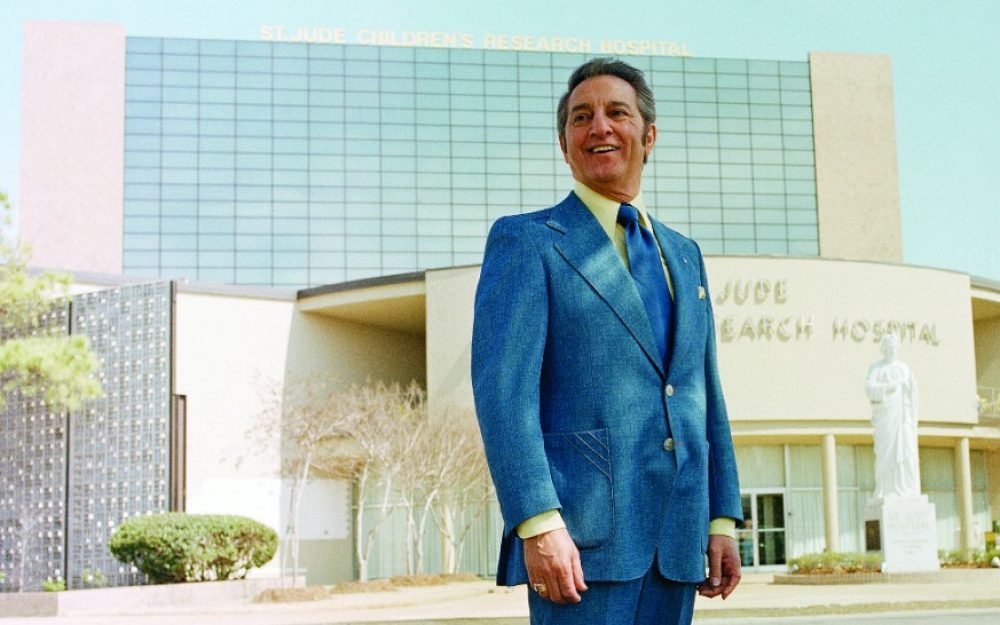
A Mission That Reframes the Work
St. Jude's mission is straightforward yet profound: advance cures and means of prevention for pediatric catastrophic diseases through research and treatment.
Families never receive a bill for treatment, travel, housing, or food. That mission shapes every operational decision across the organization, including IT.
For their network engineers, that creates a different kind of motivation. Instead of optimizing for profit or productivity metrics alone, the work directly supports clinicians, researchers, and ultimately children fighting life-threatening diseases.
Working at St. Jude means you never lose sight of why the work matters. Patients, families, and staff share the same campus, reinforcing the human impact behind every system and service.
A Campus Network Unlike Any Other
St. Jude operates as a large, highly interconnected campus environment rather than a sprawling WAN of hospitals.
Within that footprint exists one of the most technically diverse access networks anywhere:
- Clinical care environments
- Research laboratories
- Imaging facilities
- Education and global collaboration programs
- Hospitality services for families
Each domain brings radically different technical requirements and risk profiles.
Research Data at Massive Scale
Supporting research at St. Jude isn't just an IT function; it's a high-performance networking challenge at enormous scale.
Consider a typical workflow:
- High-speed microscopes capture cellular imagery from multiple angles
- Systems identify cells of interest in real time
- Selected samples are sequenced genetically
- Resulting datasets are recombined for multi-omic analysis
The data volumes involved run into multiple terabytes per dataset, sometimes more.
The infrastructure supporting it includes:
- Custom-built scientific instruments
- Prototype research systems with no documentation
- High-performance workstations
- Specialized storage and sequencing platforms
In some cases, researchers build the instruments themselves, leaving IT to figure out connectivity, throughput, and security from scratch.
When Downtime Has Scientific Consequences
In most enterprises, downtime means lost productivity or revenue.
In research environments, the impact can be far more severe.
A research job running for seven days using rare patient samples experienced a network disruption that caused failure, forcing researchers to restart the entire process and obtain new samples. This introduces:
- Financial cost
- Research delays
- Patient inconvenience
- Potentially lost scientific progress
Uptime in research networks isn't just operational—it's mission-critical.
Designing Wi-Fi for Patients
One of the most human moments came from an unexpected place: guest Wi-Fi.
After helping a young patient connect a new Xbox game affected by firewall restrictions, the experience reshaped how guest networking was viewed. St. Jude ultimately deployed fully open guest Wi-Fi (with appropriate segmentation and controls), recognizing that connectivity isn't a luxury for patients and families.
It's a lifeline to:
- Entertainment
- Education
- Social connection
- Emotional relief
Guest Wi-Fi became a critical service, not an afterthought. The network name? HopeNet.
Security Without Slowing the Mission
Healthcare and research environments introduce layered security requirements:
- HIPAA compliance
- Clinical system protection
- Research data governance
- Global data-sharing regulations
- PCI environments (retail, cafeteria, etc.)
St. Jude's security journey evolved through stages:
- Perimeter + distributive firewalls
- VRF segmentation and centralized firewalls
- NAC and dynamic access controls
- Toward zero trust and identity-driven policy
Security controls must protect managed endpoints, BYOD patient devices, research instruments, legacy clinical systems, and global collaborators—all without breaking critical workflows.
Automation: From Helpful to Necessary
Campus growth is accelerating rapidly with approximately 30% network growth multiple times in recent years, new buildings, and expanding research demands.
Headcount hasn't scaled at the same rate. Automation moved from "nice to have" to essential.
Current initiatives include:
- Configuration compliance via Ansible
- Infrastructure deployment with Terraform
- Automated software image management (SWIM)
Switch upgrades that once took 3–4 months can now be completed in 3–4 weeks.
AI, HPC, and the Infrastructure Behind Discovery
AI is being applied to:
- Medical imaging analysis
- Pediatric-specific model training
- Pattern detection in small datasets
The infrastructure built for AI—high-performance fabrics, massive throughput, and distributed compute—also solves long-standing research networking challenges.
Quantum: Preparing for What's Next
St. Jude is exploring quantum computing partnerships, particularly around medicine discovery.
Quantum excels at solving molecular interaction problems, such as:
- Protein binding
- Drug design
- Molecular geometry optimization
For pediatric diseases with limited sample sizes, quantum simulation could accelerate discovery dramatically.
From a networking standpoint, this introduces entirely new questions about quantum interconnectivity and hybrid qubit technology communication.
Technology in Service of Humanity
Technology is most meaningful when it serves something bigger than itself.
At St. Jude:
- Networks enable research breakthroughs
- Security protects patient trust
- Automation scales life-saving operations
- Connectivity brings comfort to families
Mission-critical takes on a deeper meaning when the mission is human life.